

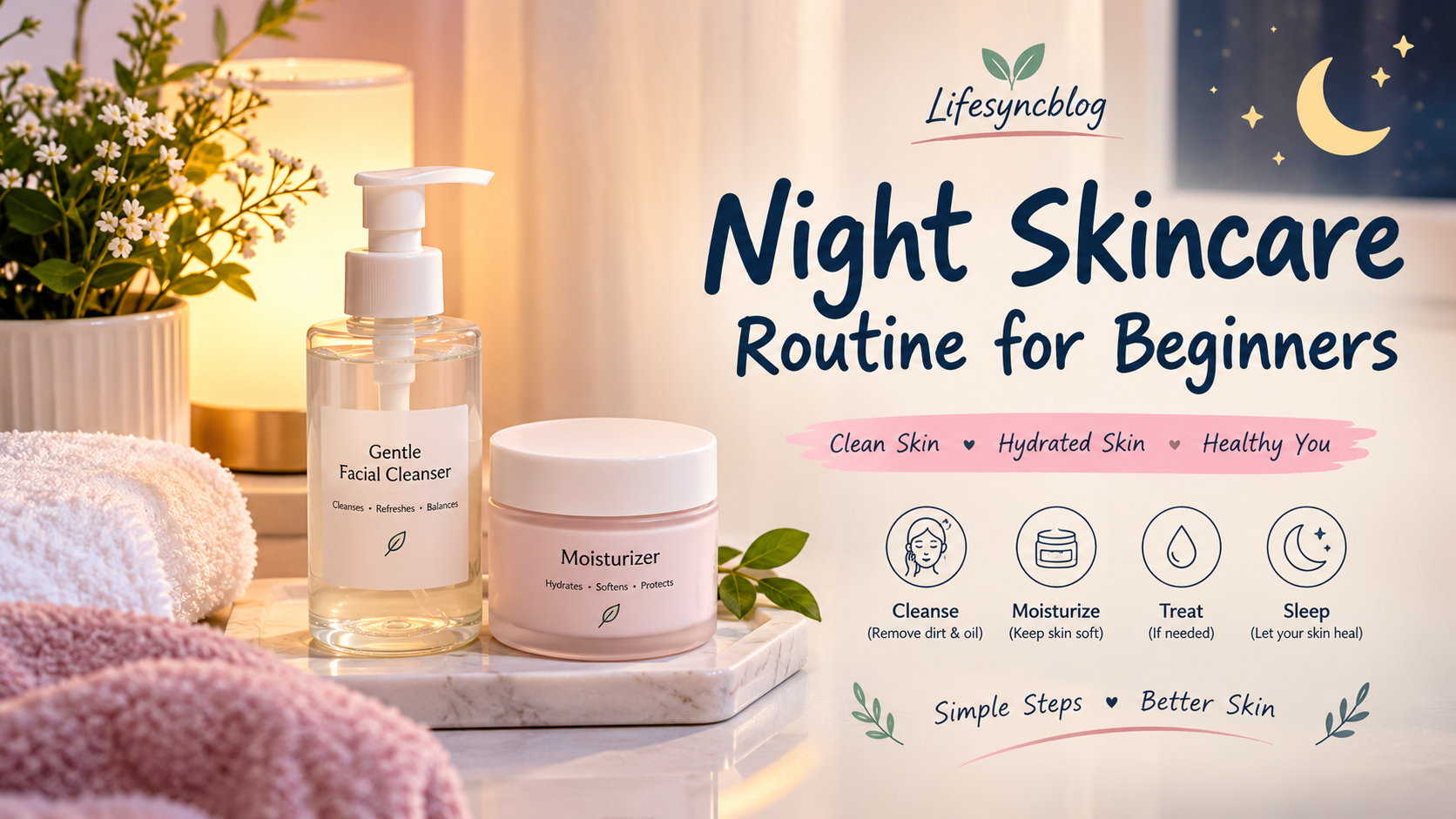
Night Skincare Routine for Beginners: A Simple Step-by-Step Guide
A good night skincare routine can help keep your skin clean, hydrated, and healthy-looking. During the day, your skin collects sweat, oil, dirt, and sunscreen. Removing these impurities before bed is an important step in taking care of your skin.
If you are new to skincare, you do not need expensive products or a complicated 10-step routine. A few simple steps, followed consistently, can make skincare easier and more affordable.
In this guide, you will learn the best night skincare routine for beginners, how to choose suitable products, and how to deal with common skincare problems.
Why Is a Night Skincare Routine Important?
Your skin needs proper care throughout the day and night. A nighttime routine helps remove daily buildup, maintain moisture, and support the skin’s natural protective barrier.
The main benefits include:
– Removing dirt, excess oil, and sunscreen.
– Keeping the skin hydrated and comfortable.
– Reducing dryness and roughness.
– Helping maintain a healthy-looking complexion.
– Creating a simple, consistent skincare habit.
Remember that skincare results take time. No routine can guarantee perfect skin overnight.
Step 1: Cleanse Your Face Gently
The first step in a night skincare routine is cleansing. A gentle cleanser removes dirt, sweat, excess oil, and leftover sunscreen.
How to do it:
1. Wet your face with lukewarm water.
2. Apply a gentle facial cleanser.
3. Massage softly with your fingertips.
4. Rinse thoroughly and pat dry with a clean towel.
Solution for common problems:
– Oily skin: Choose a gentle cleanser that removes excess oil without making your skin feel tight.
– Dry skin: Try a mild, fragrance-free cream or lotion cleanser.
– Sensitive skin: Avoid harsh scrubs, strong fragrances, and products that cause burning.
– Acne-prone skin: Avoid squeezing pimples or washing your face repeatedly.
Wash your face gently, usually twice a day and after heavy sweating. Avoid harsh soaps if they leave your skin dry or irritated.
Step 2: Apply a Moisturizer
Moisturizer is an important part of a beginner skincare routine. It helps reduce water loss and keeps your skin soft and comfortable.
Choose a moisturizer according to your skin type:
– Oily skin: A lightweight, non-comedogenic gel or lotion.
– Dry skin: A richer cream containing ingredients such as glycerin or ceramides.
– Combination skin: A lightweight lotion that feels comfortable on different areas of your face.
– Sensitive skin: A simple, fragrance-free moisturizer.
Apply it gently after cleansing, while your skin is slightly damp.
Common problem: If your moisturizer causes persistent burning, itching, redness, or swelling, stop using it. Choose a simpler product and seek medical advice if the irritation continues.
Step 3: Use Treatment Products Only If Needed
Beginners do not need to use serums, toners, exfoliants, and multiple active ingredients every night.
If you have a specific concern, such as acne or dark spots, an appropriate treatment may help. However, the right product depends on your skin type and the cause of the problem.
Follow these tips:
– Introduce only one new product at a time.
– Follow the product instructions.
– Patch-test new skincare products before regular use.
– Avoid combining several strong active ingredients when starting out.
– Stop using a product if it causes significant irritation.
For persistent acne, severe irritation, or dark spots that keep getting worse, consult a qualified dermatologist rather than trying many products at once.
Step 4: Take Care of the Skin Around Your Eyes
The skin around your eyes is delicate, so treat it gently.
If the area feels dry, you may use a small amount of a gentle moisturizer suitable for that area. Avoid getting products inside your eyes or rubbing the skin.
Dark circles and under-eye hollows can have different causes, including genetics, facial anatomy, allergies, and pigmentation. An eye cream may help with dryness or some pigmentation, but it cannot reliably remove deep hollows.
If one eye becomes noticeably more sunken, particularly if the change is sudden or accompanied by pain or vision changes, seek medical attention.
Step 5: Get Enough Sleep and Maintain Healthy Habits
Skincare products are only one part of caring for your skin. Healthy daily habits can also make a difference in how your skin looks and feels.
Try to:
– Maintain a regular sleep schedule.
– Drink water throughout the day.
– Eat balanced meals with fruits, vegetables, protein, and healthy fats.
– Avoid rubbing or picking your skin.
– Change your pillowcase regularly.
– Manage stress with relaxing activities.
If you are a teenager, aim for 8–10 hours of sleep each night.
A Simple Night Skincare Routine for Beginners
Here is an easy routine you can follow every evening:
Step 1: Gentle facial cleanser.
Step 2: Moisturizer suitable for your skin type.
Step 3: Optional treatment product, only if needed and tolerated.
That is enough for many beginners. You do not need to spend a lot of money to begin taking care of your skin.
Common Night Skincare Mistakes to Avoid
Avoid these mistakes if you want to maintain healthy-looking skin:
1. Sleeping with makeup or sunscreen still on your face.
2. Using harsh soap that leaves your skin tight or dry.
3. Scrubbing your face too hard.
4. Applying too many new products at once.
5. Using lemon juice, baking soda, or toothpaste as facial treatments.
6. Expecting dark spots or acne scars to disappear in a few days.
7. Skipping moisturizer because your skin is oily.
Also, remember to use a broad-spectrum sunscreen with SPF 30 or higher during the daytime. Nighttime skincare does not replace sun protection.
Frequently Asked Questions
1. What is the best night skincare routine for beginners?
A gentle cleanser followed by a suitable moisturizer is an excellent starting point. Add a treatment only when you have a specific concern and know which product is appropriate.
2. Can I do skincare at night without serum?
Yes. A cleanser and moisturizer are enough for many people. Serum is optional, not a requirement.
3. How long does it take to see skincare results?
Skin hydration may improve within days, while acne and pigmentation treatments can take several weeks or longer. Results depend on the concern, product, and consistency.
4. Is moisturizer necessary at night?
Moisturizer helps reduce water loss and supports the skin barrier. Most people can benefit from one, although the texture should suit their skin type.
5. Can a night cream remove dark circles?
A night cream may improve dryness and sometimes mild pigmentation, depending on its ingredients. It cannot reliably correct under-eye hollows or every cause of dark circles.
6. Should teenagers follow a night skincare routine?
Yes. A simple routine with gentle cleansing and moisturizing is usually a sensible place to start. Teenagers generally do not need complicated anti-aging products.
7. Can I use sunscreen at night?
Sunscreen is generally unnecessary indoors at night. Apply it during the daytime and reapply as directed when exposed to sunlight.
Final Thoughts
The best night skincare routine for beginners is simple, gentle, and consistent. Start with a cleanser and moisturizer, choose products that suit your skin, and introduce treatments slowly when necessary.
You do not need expensive products to begin. Focus on protecting your skin barrier, avoiding irritation, and giving your routine enough time to work.
Healthy-looking skin starts with understanding your skin’s needs—not following every skincare trend.
Disclaimer: This article provides general skincare information and is not a substitute for professional medical advice. Consult a dermatologist for persistent skin problems or reactions.